Five days · Hands-on learning
5-Day Discrimination Workshop
Mobile, AlabamaView workshop

Where legendary science-based behavioral technology meets tomorrow’s top trainers.
Kirsten Kraljevic:
So my name is Kirsten Kraljevic and I’ve been training animals for 35 years. I’ve mostly trained dogs, but I’ve worked with many species, horses, cats, pigs, chickens, all sorts of animals.
So what I do is I teach operant conditioning to animal trainers. People think operant conditioning is a method, but it really isn’t. It’s a natural phenomenon. That’s what happens when anybody learns an animal or a person. It happens without us.
If we’re not watching, that’s still how learning unfolds. A simple way to look at operant conditioning is that an organism is going to do more of what it finds rewarding and do less of what it finds punishing.
That’s an amoeba in a petri dish or that’s a person just going through life, right? So what we do in the course that I teach is we use chickens because chickens are what we call the perfect tabletop model to teach animal trainers operant conditioning.
Our courses are unique. They are developed to help the animal trainers with their mechanical skills, their timing, their criteria and the rate of reinforcement and all that can be incorporated into the development of their observational skills, right?
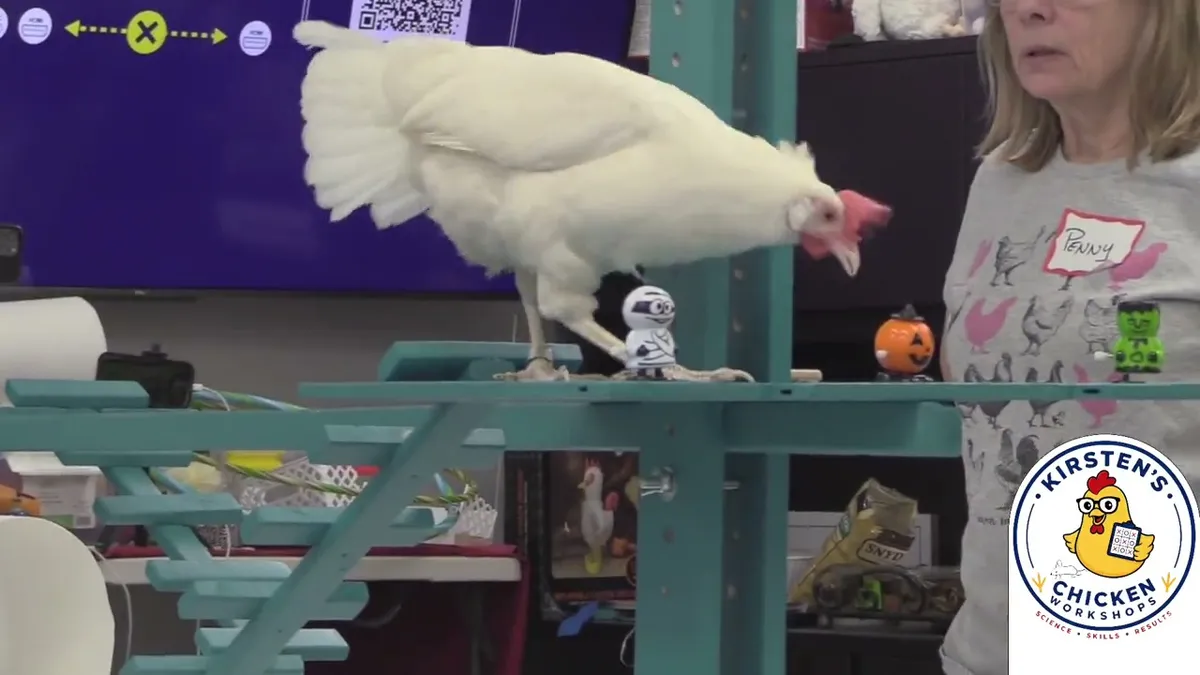
A lot of other courses you go to, you’re either watching other people train or you’re in a classroom learning theory. We put the principles in their hands. We put the technology in their hands and they prove it to themselves on the table.
Why chickens? Students don’t have a relationship with the chicken. The chicken is just out there trying to get you to give it some food. Chickens are opportunists, right? And we’re giving you a measuring cup with a clicker on the end to reward them.
They are working those students right and left and it is beautiful. You would think you would have to use a different batch of chickens every time. No, because each student is different and the chicken is figuring out how to get something out of that student.
The only reason I would say why with me is because I don’t know anyone who spent as much time as I have trying to get it right. That’s very honest.
I think there’s probably better trainers out there than me, more knowledgeable people, but I don’t think there’s anyone that wants it more than me or wants to stay as true to the technology.
So where are the workshops located? Our workshops are located in Mobile, Alabama. So Mobile does have very genuine southern hospitality, incredible seafood restaurants, Dauphin Island.
It’s just one of the last living gems of family beaches. People love it down there. We’re very close to the University of South Alabama.
I know a lot of people from Europe when they come here are looking for a place to walk. They walk way more than we do around here.
That’s a gorgeous campus to walk on. Like the South’s best kept secret, we actually started Mardi Gras, but don’t tell the people in New Orleans that.
And speaking of New Orleans, we have very similar cultures without that big city inconvenience.
If you want to go to New Orleans, it’s two hours away, but we prefer that you stay here and enjoy our hospitality.
People think they’ve gone to animal training workshops. They’ve sat in a classroom. They’ve listened to lectures. They’ve watched other people train.
I know of no other place where we put you right there. Mano a mano with that animal where you get to prove, you know, proof of concept of these principles that we give you.
You don’t need any experience to take this workshop.
And that’s the kicker right there, because sometimes it’s the people that haven’t had a lot of experience that do really well because they don’t have as much to let go of.
You have to remember, if you’ve been doing this a really long time, you have habits and beliefs that maybe you haven’t proven to yourself yet are not necessary.
I think the biggest thing that holds trainers back is ego. I really do.
It’s either the ego that tells you you can’t do this, you’re not good enough, or it’s the ego that tells you that you know everything and you’re not going to get a thing out of this class.
And the second your ego is in your way, you lose. Right. If you go in there just curious. Just be curious.
Just follow the exercises that we give you. And it’s loose. We don’t tell you how to train. We give you the principles.
Right. Because these principles are proven. Remember, this is happening.
This is a natural phenomenon of behavior change. It’s happening whether you think it is or not.
We just put language around it. You’re just figuring it out.
Right. And if you stay curious and you let yourself do that, you’re going to find a faster way, a faster way than you used to do, or a new way that you never knew possible.
You may want to change somebody’s behavior, you may really want to change something’s behavior, but the only behavior you really have the power to change is your own.
So in this class, we’re teaching you change your behavior fast, change your behavior fast. When you change your behavior, you can affect who you want to change.
Like your student or an animal, you can affect that. But you have to change first. Your behavior has to change first.
A lot of people don’t think about it like that. If someone’s on the fence about signing up for this course, I always tell them take the leap, take the leap and come to the course.
And I’ve never had anybody regret it. I’ve had people, I’ve had lots of people regret that they didn’t take them sooner.
Never to this day had anybody regret that they actually took the leap to take them.
The chicken teaches the trainer
Workshops rooted in the legendary methods of Bob and Marian Bailey, designed for today’s animal trainers.
Whether you work with dogs, dolphins, parrots, horses, or working K9s—this is where your skills get sharper, your timing gets cleaner, and your understanding of behavior deepens.
All with the help of one remarkable teacher: the chicken.
Do you want to master the secrets of changing animal behavior quickly, easily and precisely? You need to train a chicken
Upcoming workshops
Don’t forget to check out our podcast
Listen for expert interviews, practical how-tos, and real-world case studies that dig into evidence-based methods and problem-solving strategies. Available wherever you get podcasts.
Learn by doing
Five days · Hands-on learning
Five days · Hands-on learning
Five days · Hands-on learning
“Kirsten’s workshops are the best learning experience for novice trainers wishing an introduction to animal training fundamentals. At the same time, these same workshops are designed for experienced trainers, testing their ability and willingness to change their behavior…
Chicken Workshops teach trainers to ask: When should I change? How should I change? Can this behavior be taught faster?”
Dr. Bob BaileyFormer Director of Training, U.S. Navy Marine Mammal Program
Read the full endorsementSmall teachers. Lasting skills.
These immersive, five-day workshops are built on the principles of Operant Conditioning, mechanical skill-building, and behavior analysis. They are a direct continuation of the original chicken workshops developed by Animal Behavior Enterprises (ABE) and used by the Brelands and Bob Bailey to train animals for film, military, research, and entertainment.
How to observe behavior with precision
How to shape behavior quickly and clearly
How to refine your timing, reinforcement, and decisions
How to train in teams with peer coaching
How to challenge your skills in a controlled environment
This isn’t a lecture. It’s a hands-on, eyes-open, skill-sharpening experience.
A remarkable teaching model
What you learn with a chicken transfers immediately to other species. It’s not about chickens. It’s about training.
Leghorn chickens are fast, responsive, and unaffected by your intentions. They reflect your actual behavior—not your hopes, assumptions, or story. That’s what makes them such powerful teachers.
The Brelands searched for over 40 years for a better teaching model—and always came back to the chicken.
“We did not train dolphins in this class. We trained chickens… Months later I saw the wisdom of the Brelands’ choosing chickens as their ideal ‘animal model’ for teaching trainers the practice of modern, science-based animal training.”
— Bob Bailey
Built on a remarkable legacy
Your instructor
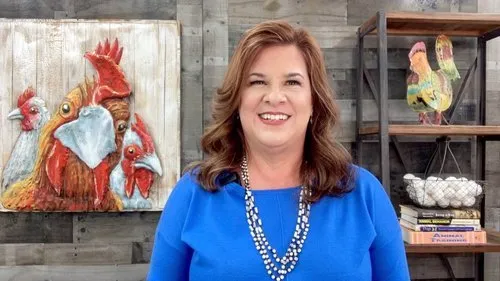
In 2002, Kirsten attended all five of Bob Bailey’s original chicken workshops—and everything changed. Today she continues this training tradition at her facility in Mobile, Alabama.
Meet Kirsten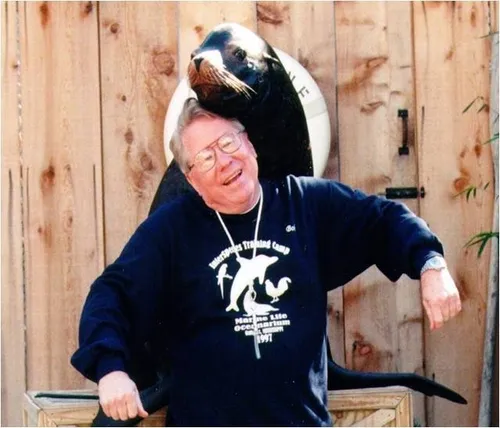
Teacher & mentor
Bob Bailey’s work spans animal training, engineering, and teaching. His mentors were Keller and Marian Breland; his mentorship helped shape Kirsten’s approach.
About Bob Bailey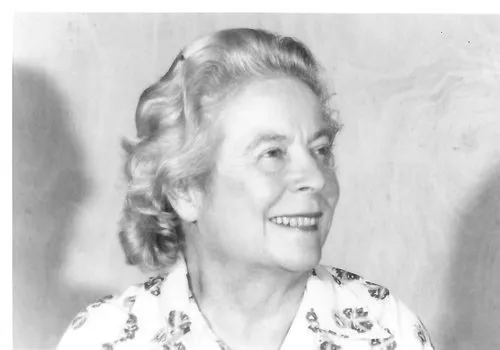
A training pioneer
Marian and Keller Breland pioneered the practical application of operant conditioning through Animal Behavior Enterprises. Their work, and the chicken workshops Marian developed with Bob, remain at the heart of this training tradition.
Explore the historyKirsten Kraljevic is a professional animal trainer with over 35 years of experience and a B.A. in Sociology and Anthropology from St. Mary’s College of Maryland.
In 2002, she attended all five of Bob Bailey’s original chicken workshops—and everything changed. With Bob’s mentorship, she built “My Chicken Workshop,” a purpose-driven facility in Mobile, Alabama, where she continues this proven training tradition.
Kirsten teaches with clarity, compassion, and scientific rigor—creating an environment where students feel safe to experiment, learn, and grow. Today, Bob Bailey continues to advise and occasionally co-teach with her.
Dr. Robert E. (Bob) Bailey calls himself a systems analyst/engineer. He has 68 years of experience studying and training animals. His academic background is in Physics, Chemistry, Biology, and Engineering.
Dr. Bailey designed and built specialized devices, he planned behavior training programs, he taught animal trainers, and he trained animals.
His primary mentors were Keller and Marian Breland (later, Marian Bailey), who were students of B. F. Skinner. The Brelands and Baileys demonstrated that animal training can be a technology if practitioners are willing to practice certain principles and procedures based on the science of how animals, and we, learn.
Marian Breland Bailey, affectionately known as mouse (December 2, 1920 – September 25, 2001)
The Brelands and the Baileys experienced success in training 140 different species using 5 principles of Operant Conditioning. In addition, they worked with thousands of individual animals and solved real-world training challenges by understanding the power of timing, criteria, and the rate of reinforcement.
My mentor, Dr. Bob Bailey, always says “There is no magic bullet.” The only things that will bring you the success you deserve in your animal training are repetition, muscle memory, improved observational skills, and a desire to be better off tomorrow than you were today.
Success with applying the principles, and your mechanical skills, will never come from an online class. Hands-on training is now. The opportunity is now. You have to show up and do all the hard work to succeed.
I believe the Chicken training workshops are a life-changing experience. It changed mine. I know it will change yours.
From our students
“I learned how important the timing of the mark and reward is to get an accurate behavior from my animal.”
 Darlene Paxton
“I would absolutely recommend this to anyone who works with dogs, not just trainers!”
 Alyne Michael
“how a simple change in your own behavior can increase your training skills ten fold”
 Claudia Shenesey
“If you reinforce a behavior, it’s more likely to occur again. If you don’t reinforce it, it’s less likely to occur again. Animals are learning all the time, not just during training sessions. And they’re learning with the same principles, and Operant Conditioning is the way that behavior changes in the real world.”
Dr. Marian Breland Bailey
Stay in the loop
Join the mailing list to get exclusive announcements and workshop updates from Kirsten.